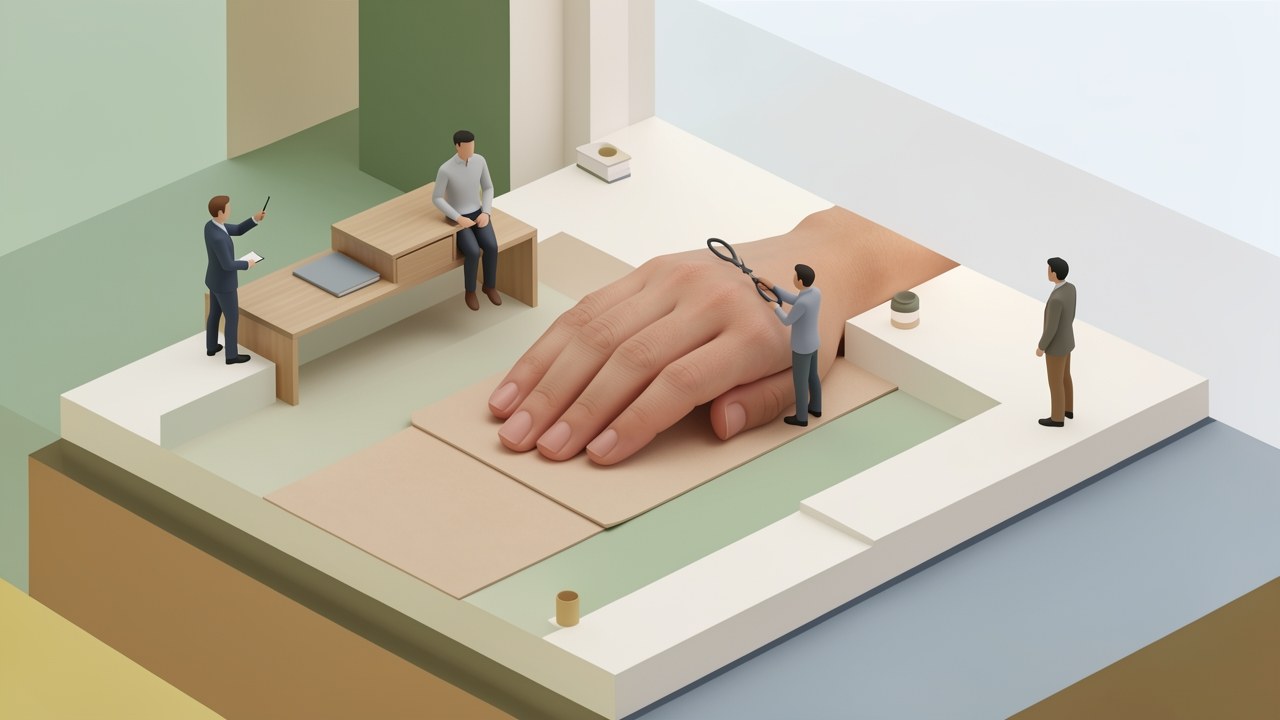
Core tools for a basic routine
A complete at-home manicure setup does not need to be large. For natural nails, the core tools are a nail clipper or small scissors, a nail file, an optional buffer, a cuticle pusher, and a nail brush for cleaning. Each tool has a distinct job, and understanding that job is the first step toward using it safely.
The table below outlines the primary tools, their purpose, and the notes that matter most for at-home use.
| Tool | Primary purpose | Key notes for at-home use |
|---|---|---|
| Nail clipper | Shortening the free edge of fingernails or toenails | Use sharp, clean blades; clip straight across and finish with a file |
| Nail scissors | Trimming nails and cuticles with more control than a clipper | Best for thin nails or detailed trimming; keep blades sharp and clean |
| Nail file | Shaping the free edge and smoothing edges after clipping | Choose 240 grit or finer for natural nails; file in one direction |
| Nail buffer | Smoothing and polishing the nail surface, not shaping | Use fine to ultra-fine grits; buff lightly and in one direction |
| Cuticle pusher | Gently pushing back cuticle tissue after softening | Push, never cut; stop if you feel pain or see blood |
| Nail brush | Cleaning under the free edge and around the nail | Use a soft brush with soap and water; keep it clean and dry |
Clippers and scissors: when to choose which
Clippers and scissors both cut the nail, but they suit different situations. A standard nail clipper uses a curved blade and a lever action to trim the free edge quickly, which works well for most fingernails that are not too thick. Nail scissors, including small curved cuticle scissors, offer more control for delicate trimming or for nails that are thin or irregular.
Whichever you choose, the cutting edge should be sharp and clean. Dull blades can crush or tear the nail edge rather than cut it cleanly, which leaves a rough edge that then needs more filing. After clipping, use a file to smooth the free edge and remove any sharp corners.
For toenails, a larger clipper or a toenail-specific tool is easier to control. Professional pedicure guidance describes toenail work as tending to reward a stiffer file board in the 180 to 240 grit range rather than a thin flexible board. Foot files and foot paddles are a separate category of tool with their own abrasive scale; they are not meant for fingernails.
- Use a clipper for quick, even shortening of the free edge.
- Use scissors when you need more precision or are trimming thin nails.
- Keep blades sharp; replace tools that crush or tear instead of cutting.
- Finish with a file to smooth the edge and avoid snags.
Files and buffers: grit and technique
Files and buffers are often confused, but they do different jobs. A file shapes the free edge and shortens the nail; a buffer smooths and polishes the nail surface. Using a buffer to shape a nail, or a coarse file on the nail plate, can remove more material than intended.
The grit number on a file or buffer describes the size and density of the abrasive particles on its surface. A higher number means a finer, less aggressive abrasive; a lower number means a coarser, more aggressive one. For natural nails, 240 grit is widely presented as the safe standard for de-shining and light shaping of the nail plate, and files below 180 grit are described as intended for enhancement product rather than the natural nail plate. A 180 grit file can be used with care on the free edge of a natural nail, but the plate surface should not be filed with anything below 240 grit.
Buffer grits sit at the fine to ultra-fine end of the range. Published buffer guidance describes roughly 180 to 240 grit for smoothing and de-shining, 280 to 320 for refining, 400 to 600 for polishing, and 800 to 1200 and higher for a high-shine finish. These numbers are guidance rather than fixed standards, and different brands may label their sequences differently.
Technique matters as much as grit. File and buff in one direction rather than back and forth. Back-and-forth motion generates heat through friction and removes material unevenly. Excess pressure, sawing motions, or using too coarse a grit can thin, split, peel, or weaken the nail over time. Over-buffing is one of the most common causes of nail thinning.
The core or board of a file also affects how it works. A stiff, thin board transfers more of your hand's energy to the nail and is used with coarser grits. A soft or foam-cored board absorbs and evens out pressure and is preferred for finer work. This is why two files with the same grit number can feel very different in use.
Common file formats include abrasive emery boards, cushion or foam-core files, glass or crystal files, metal files, and ceramic files. One specialist guide describes metal files as too harsh for natural fingernails, with an abrasive action that tends to tear rather than smooth the nail edge; that comparison is not corroborated by the other sources here. The same guide recommends a good-quality 240 grit emery file as the most practical and recommended option for home use on natural nails, reusable with care if kept clean, stored dry, and replaced when it no longer files efficiently.
- File shapes the edge; buffer smooths and polishes the surface.
- Higher grit number equals finer abrasive; lower equals coarser.
- For natural nail plates, use 240 grit or finer.
- Use one-direction strokes, not back-and-forth sawing.
- Replace a file or buffer when it no longer performs its job efficiently.
Sources: thenailwiki.com, iNAIL SUPPLY (nailsbestbuy.com), Insight Cosmetics Group, Sally Beauty (United Kingdom storefront)
Cuticle tools and safe use
The cuticle area is delicate. A cuticle pusher is designed to gently push back the thin layer of skin that grows over the base of the nail, usually after softening the skin with warm water or a cuticle softener. The tool should push, not cut. Stop immediately if you feel pain or see blood.
Cuticle nippers and cuticle scissors are sometimes used to trim small hangnails or dead skin, but they are sharp. A common approach is to trim only what clearly needs trimming and never to cut into the living skin around the nail. Over-trimming can create an open wound that is more vulnerable to irritation or infection.
For most people doing their own nails at home, gentle pushing is enough. If the cuticle area is red, swollen, or painful, that is a sign to leave it alone and let it heal rather than to keep working on it.
- Soften the cuticle area before pushing.
- Push gently; never force the tool under the skin.
- Use nippers only for clearly dead, hanging skin.
- Stop if you feel pain or draw blood.
Cleaning and storing tools between uses
Clean tools work better and last longer. After each use, remove visible debris from clippers, scissors, pushers, and brushes with warm soapy water. Rinse and dry them thoroughly before storing. Moisture left on metal tools can encourage rust, and a damp brush can harbor bacteria.
Abrasive-coated files on cardboard or foam cores cannot be fully sterilized. In professional settings, these files are treated as single-use or given to one client for continued single-person use rather than shared between clients. At home, the same logic applies: a file used on one person should not be passed around.
For tools that can be washed and disinfected, such as metal clippers or a washable file core, a common professional workflow is to clean first, then disinfect, then store dry in a covered container separated from unused items. The disinfectant maker's directions, including dilution and contact time, should be followed exactly. In professional settings, the sanitation requirements for nail files come from the relevant state board rather than from the file manufacturer.
Buffers used on nails with an active condition such as onycholysis or green nail syndrome should be discarded immediately after use and never returned to general stock.
- Clean tools with warm soapy water after each use.
- Dry thoroughly before storing.
- Keep tools in a covered container, separated from clean items.
- Do not share files or buffers between people.
- Discard buffers used on a nail with an active condition.
Tools a beginner can skip
Many nail tools are designed for specific jobs that most beginners do not need. For a simple at-home routine on natural nails, you can skip electric files, cuticle nippers, and specialized foot files unless a specific need arises. Electric nail files do not replace hand files; they change which hand files are needed. The machine handles bulk removal and surface work, while a hand file handles final shape and control-sensitive areas. That relationship is described for professional use, and it is not necessary for basic home care.
Cuticle nippers are worth skipping at first because they are easy to misuse. If you do not have a clear hangnail that needs trimming, a pusher and some cuticle oil will usually do more good. Similarly, a coarse foot file or callus shaver belongs to pedicure work and is not part of a basic fingernail kit.
If you are building a first kit, start with a clipper, a 240 grit file, a soft nail brush, and a cuticle pusher. Add a buffer if you want a natural shine, and add nippers only if you find you regularly need to trim hangnails. A small, focused kit is easier to keep clean and easier to use well.
- Electric files: not needed for basic home care; they are a professional tool.
- Cuticle nippers: easy to misuse; skip unless you have a clear need.
- Foot files and callus shavers: for pedicure work, not fingernails.
- Start with a clipper, a 240 grit file, a nail brush, and a pusher.
Sources: iNAIL SUPPLY (nailsbestbuy.com)
Frequently asked questions
Do I need an electric nail file at home?
For basic home care on natural nails, an electric nail file is not necessary. Professional guidance describes the electric file as handling bulk removal and surface work, with a hand file used for final shape and control-sensitive areas. That relationship is described in a professional context. At home, a hand file in the 240 grit range is sufficient for shaping natural nails. If you are not doing professional-level work, an electric file adds cost without a clear benefit.
Sources: iNAIL SUPPLY (nailsbestbuy.com)How often should I replace a nail file?
Replace a file when it no longer performs its intended function. A worn file requires more passes and more pressure to achieve the same result, which increases the risk of over-working the nail. If you find yourself pressing harder or making many extra strokes, it is time for a new file. There is no fixed number of uses or timeframe that applies to all files; performance and visible wear are the practical indicators.
Sources: thenailwiki.com, iNAIL SUPPLY (nailsbestbuy.com), Insight Cosmetics GroupCan I share nail clippers with someone else?
It is best not to share nail clippers or other tools that contact the nail and skin. A file or buffer used on one person should not be passed around, and abrasive-coated files on cardboard or foam cores cannot be fully sterilized. In professional settings, the sanitation requirements for nail files come from the relevant state board rather than from the file manufacturer. At home, keeping personal tools for one person only is the most straightforward approach.
Sources: thenailwiki.com, iNAIL SUPPLY (nailsbestbuy.com)Is a glass file better than an emery board?
There is no single answer that applies to everyone. Glass or crystal files are a different material with different handling requirements. One specialist guide describes a fine-grit emery file, such as 240 grit, as easier to use for most people and a practical choice for natural nails. That is one publisher's position, not a consensus. The key is choosing a grit appropriate for natural nails and using it gently in one direction.
Sources: thenailwiki.comSources
- Nail Files & Grit Guide: Types, Grits, and When to Use Each – thenailwiki.com — thenailwiki.com
- Nail Buffers Guide: Types, Uses, and Buffing Technique – thenailwiki.com — thenailwiki.com
- Best Nail File Guide: Grit Numbers Explained – iNAIL SUPPLY — iNAIL SUPPLY (nailsbestbuy.com)
- The Ultimate Nail File Guide – Files Explained In Detail — Insight Cosmetics Group
- Nail Files & Buffers: Essential Tools for Nail Technicians – Pure Spa Direct — Pure Spa Direct
- Nail Files & Blocks & Buffers | Nail Care | Sally — Sally Beauty (United Kingdom storefront)