What everyday nail care covers, and what it does not
Everyday nail care is the regular maintenance of your natural fingernails and toenails at home. It centers on five practical areas: cleaning, trimming and shaping, filing, cuticle care, and moisturizing. Publishers that write about nail routines describe these same broad steps, even when they use different words.
The focus is on the nail plate, the surrounding skin, and the habits that keep both comfortable. Nails are made mostly of keratin, the same protein found in hair and skin. That structure responds to how you treat it daily, which is why routine care is about small consistent actions rather than one-time treatments.
Everyday nail care does not cover diagnosis or treatment of nail disease, and it does not replace professional help for painful, infected, or rapidly changing nails. It also does not promise dramatic overnight change: nails grow slowly, so improvements show up gradually.
- Cleaning: keeping nails and the skin around them clean and dry.
- Trimming and filing: shortening and shaping nails safely.
- Cuticle care: gentle pushing back rather than aggressive cutting.
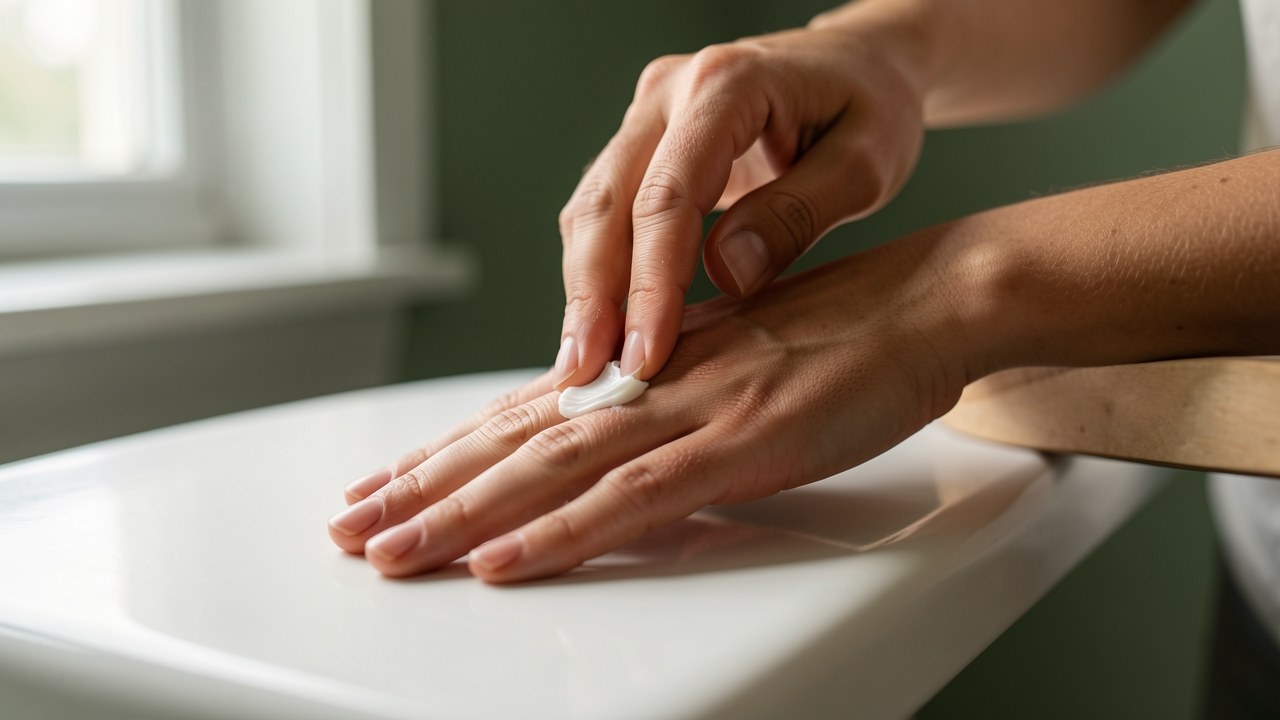
- Moisturizing: daily oil or cream massaged into nails and cuticles.
- Protection: gloves for wet work and gentler product choices.
Sources: China Glaze, The Beauty Box, Manucurist, Face and Body Spa, Cortiva Institute, Dazzle Dry
Why natural nails need consistent care
Natural nails are not inert. The nail plate absorbs and loses moisture, and repeated wet-dry cycles can leave it weaker and more prone to splitting. Excessive water exposure has been described as a contributor to nail weakness and, in some cases, fungal problems.
Consistency matters because many nail problems build up slowly. Filing in one direction rather than sawing back and forth is a widely repeated practice that helps prevent splitting and peeling. Trimming regularly, roughly every one to two weeks according to one spa source, is recommended to help prevent breakage, though other publishers describe periodic trimming without a fixed interval.
Cuticles are part of the picture too. They act as a protective barrier that helps keep infection out, so gentle pushing back after softening is preferred over cutting them aggressively. Over-buffing the nail surface can weaken the plate and lead to splitting, so it should be done sparingly if at all.
Growth itself sets the pace. One brand source states that fingernails grow on average about two to three millimeters per month and can take roughly four to six months to fully regrow, with toenails growing more slowly. Those figures come from a single commercial source and are best treated as general context rather than a precise schedule.
Sources: China Glaze, The Beauty Box, Face and Body Spa, Cortiva Institute, Gabby Angelique (YouTube)
The five parts of a simple routine
A simple routine does not require a long list of products. The five parts below are the areas that most routine guides agree on, and they can be done in a single short session each week, with small daily habits layered on top.
Keep the steps in order so that cleaning and shaping happen before moisturizing and protecting. This sequence keeps the nail surface and cuticle area ready for the final products.
- Clean: wash hands, scrub gently under the free edge with a soft brush, and dry thoroughly.
- Trim and shape: trim straight across with clean nail clippers, then round the corners slightly to avoid snags. Avoid cutting too short, which is cautioned against because it can lead to ingrown nails.
- File: use a fine-grit file in one direction, not a back-and-forth sawing motion, to help prevent splitting and peeling.
- Care for cuticles: after softening in warm water or with cuticle oil, push back gently with a wooden stick. Do not cut cuticles aggressively.
- Moisturize: massage cuticle oil or hand cream into the nail and surrounding skin daily, which is the single most consistently recommended practice for maintaining moisture.
Sources: China Glaze, The Beauty Box, Manucurist, Face and Body Spa, Cortiva Institute, Dazzle Dry, Gabby Angelique (YouTube)
Daily versus weekly care tasks
Splitting routine care into daily and weekly tasks makes it easier to keep up. The daily work is short and mainly about moisture and protection. The weekly work is the shaping and cleanup session.
For daily care, apply cuticle oil or hand cream and massage it in, and wear gloves for dishwashing or cleaning to limit water and chemical exposure. If you use polish remover, choose an acetone-free option when possible, because acetone-based removers can dry out and weaken nails with frequent use.
For weekly care, trim and file if needed, gently push back cuticles after softening, and check for any rough edges that could snag. There is no single schedule that fits everyone; one source suggests trimming every one to two weeks, but you can adjust based on how quickly your nails grow and how much they break.
- Daily: moisturize nails and cuticles; wear gloves for wet or chemical-heavy tasks; avoid using nails as tools.
- Weekly: trim and file if needed; push back cuticles gently; inspect for snags or changes.
- As needed: remove polish with a gentle remover; take breaks from polish between applications.
Sources: China Glaze, The Beauty Box, Face and Body Spa, Cortiva Institute, Dazzle Dry
Starter checklist for the first week
This checklist is a simple way to begin without buying a full set of new products. It uses the five routine areas and keeps the first week manageable.
You do not need special items to start. If you already have a nail clipper, a fine-grit file, a soft brush, and a moisturizer or oil, that is enough for the basic routine. Add products gradually if you want to. A base coat before colored polish is one addition that is widely recommended, because it creates a protective barrier that helps prevent staining.
- Day 1: Clean and inspect your nails; note any snags, peeling, or tenderness.
- Day 2: Trim straight across with clean clippers, then round the corners slightly.
- Day 3: File in one direction with a fine-grit file.
- Day 4: Soften cuticles and push them back gently with a wooden stick.
- Day 5: Start daily moisturizing with cuticle oil or hand cream.
- Day 6: Wear gloves for any dishwashing or cleaning.
- Day 7: Review and repeat the weekly steps as needed.
Sources: China Glaze, The Beauty Box, Face and Body Spa, Cortiva Institute, Gabby Angelique (YouTube)
Common habits that work against natural nails
Some everyday habits can undo the benefits of a good routine. Peeling off gel polish is one example: it can remove layers of the natural nail and leave nails thin and sensitive. Nail biting and cuticle picking are also described as damaging to the nail structure and as possibly increasing infection risk.
Cutting cuticles aggressively is another habit to avoid. Because cuticles act as a protective barrier, cutting them can lead to infection, scarring, and permanent changes to the nail pattern, according to one source. Gently pushing them back is the safer approach.
Continuous polish wear without breaks is associated with staining and dryness. Taking periodic breaks is recommended; the length of the break varies by source, with one suggesting a few days a month and another suggesting every few weeks. The popular idea that nails need to breathe is described as inaccurate; the concern is staining and dryness rather than oxygen.
Sources: China Glaze, The Beauty Box, Manucurist, Face and Body Spa
A word on products, strengtheners, and nutrition
You do not need a large collection of beauty products to care for natural nails. A gentle cleanser, a fine-grit file, a soft brush, and a moisturizer cover most of the routine. If you use polish, a base coat is a reasonable addition.
Nail hardeners and strengtheners containing certain ingredients can make nails too rigid over time and increase the chance of cracking. One source describes using them for a few weeks combined with moisturizing as a balanced approach.
Nutrients such as biotin, iron, protein, and omega-3 fatty acids are often mentioned as supporting nail health, with food sources such as eggs, nuts, fish, leafy greens, and beans. These are general nutrition associations, not treatment recommendations, and no dosage advice is given here.
Sources: China Glaze, Face and Body Spa, Cortiva Institute, Dazzle Dry, Gabby Angelique (YouTube)
Where to go next on this site
This page is the starting point. The sections below expand each part of the routine in more detail, from tool selection to damage prevention and when to involve a professional.
If your nails are damaged or painful, or if you notice changes in color, shape, or thickness that concern you, the professional care page explains when it is appropriate to seek help.
For a closer look at each step, explore nail care basics, manicure preparation, damage prevention, tools, and hygiene. These pages follow the same practical, at-home approach.
Site information pages cover our editorial approach, privacy, terms, and how to get in touch.
Sources: China Glaze, The Beauty Box, Manucurist, Face and Body Spa, Cortiva Institute, Dazzle Dry, Gabby Angelique (YouTube)
Frequently asked questions
Can I start a nail care routine if my nails are already damaged?
Yes, a gentle routine can still be useful. Start with the basics that do not stress the nail: keep nails clean and dry, moisturize daily, and wear gloves for wet work. Avoid aggressive cutting, over-buffing, and peeling off gel polish, since those can remove layers of the natural nail and leave it thin and sensitive. If you have pain, swelling, or signs of infection, that is a reason to see a professional rather than continue home care.
Sources: China Glaze, ManucuristDo I need special products to begin, or can I use what I already have?
You can begin with what you already have. A nail clipper, a fine-grit file, a soft brush, and a moisturizer or cuticle oil cover the core routine. A base coat is a helpful addition if you use colored polish, because it creates a protective barrier that helps prevent staining. Acetone-free polish remover is a gentler option when you need to remove polish.
Sources: China Glaze, The Beauty Box, Face and Body Spa, Cortiva Institute, Dazzle Dry, Gabby Angelique (YouTube)How long before a simple routine makes a visible difference?
There is no fixed timeline, because nails grow slowly. One source states that fingernails grow on average about two to three millimeters per month and can take roughly four to six months to fully regrow, with toenails growing more slowly. That means changes from trimming, filing, and moisturizing tend to appear gradually rather than overnight.
Sources: China GlazeIs it bad to wear nail polish every day?
Wearing polish is not described as harmful by itself, but continuous wear without breaks is associated with staining and dryness. Taking periodic breaks is recommended, though the suggested length varies by source, from a few days a month to every few weeks. The idea that nails need to breathe is described as inaccurate; the concern with constant polish is staining and dryness rather than oxygen.
Sources: China Glaze, Face and Body SpaShould I cut my cuticles?
Gentle pushing back is preferred over cutting. Cuticles act as a protective barrier that helps prevent infection, so they should be pushed back gently after softening rather than cut aggressively. One source notes that cutting cuticles can lead to infection, scarring, and permanent changes to the nail pattern.
Sources: China Glaze, The Beauty Box, Face and Body Spa, Gabby Angelique (YouTube)How often should I trim my nails?
There is no single interval that applies to everyone. One spa source recommends trimming roughly every one to two weeks to help prevent breakage. Other publishers describe periodic trimming without giving a fixed number. A practical approach is to trim when nails are long enough to catch or break, using straight-across trimming with slightly rounded corners.
Sources: The Beauty Box, Face and Body SpaWhat kind of file should I use?
A fine-grit file is generally recommended for natural nails. Coarse grits such as 180 or 100 are described as too aggressive, and glass files are described as higher grit. Whichever file you use, file in one direction rather than sawing back and forth to help prevent splitting and peeling.
Sources: China Glaze, The Beauty Box, Cortiva Institute, Gabby Angelique (YouTube)Are vertical ridges on nails a health concern?
Vertical ridges are described as common with age and as an aesthetic rather than a medical concern in the available sources. If you notice other changes such as discoloration, thickening, or pain, that is a reason to seek professional advice.
Sources: Manucurist, Dazzle DrySources
- The Best Nail Care Routine for Strong and Healthy Nails — China Glaze
- Nail Care Routine At Home — The Beauty Box
- How should you care for your nails based on their type? — Manucurist
- Nail Care 101: A Guide to Healthy, Beautiful Nails — Face and Body Spa
- Natural Nail Care Tips for Healthy Nails — Cortiva Institute
- The Ultimate Guide to Natural Nail Care: Tips & Tricks — Dazzle Dry
- How to take care of your nails at home | long healthy natural nails — Gabby Angelique (YouTube)