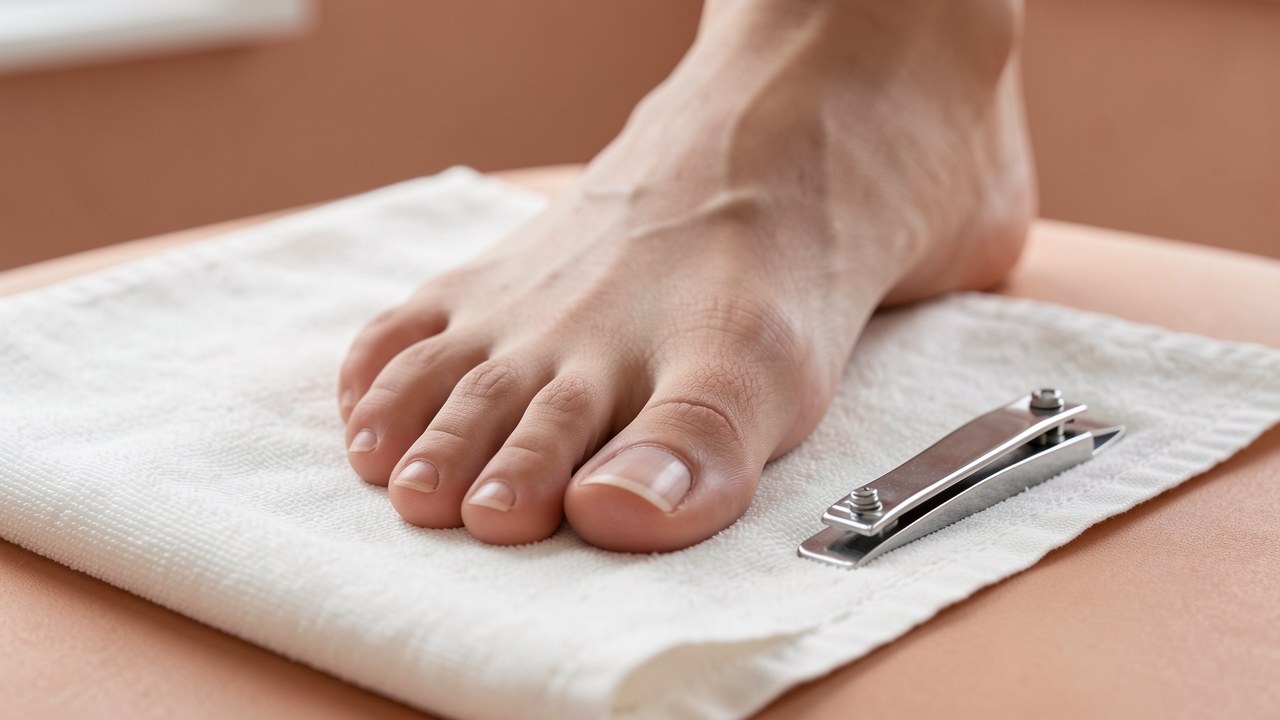
What an ingrown nail is
An ingrown toenail, also called onychocryptosis, occurs when the nail plate penetrates the soft tissue beside it. That penetration causes inflammation, pain, and sometimes infection or difficulty walking normally.
The big toe is affected most often. The nail unit of the big toe accounts for roughly 80 percent of cases. Ingrown toenails are common in primary care, making up about 20 percent of foot problems seen there, and incidence peaks in adolescence and early adulthood.
Ingrown nails are usually a problem of the toenails rather than the fingernails, because toes bear weight and fit inside shoes.
- Onychocryptosis is the clinical term for an ingrown nail.
- The big toe is involved in about 80 percent of cases.
- Ingrown toenails account for roughly 20 percent of foot problems in primary care clinics.
- Cases are most frequent in adolescents and young adults.
Sources: National Center for Biotechnology Information (NCBI), U.S. National Library of Medicine
How trimming and footwear habits contribute
Improper nail trimming and inadequate foot hygiene are the most commonly identified factors in the development of ingrown toenails. Cutting the nail too short or rounding the corners can encourage the edge to grow into the surrounding skin.
Tight or constrictive footwear is another predisposing factor. Pressure from a shoe pushes the soft tissue against the nail edge, which can start or worsen the problem.
Other reported contributors include injury to the toe, excessive sweating, obesity, diabetes, and inherited or structural nail abnormalities. These factors often overlap, and no single habit explains every case.
- Trimming technique is the factor most consistently linked to ingrown toenails.
- Shoes that squeeze the toes add pressure against the nail edge.
- Injury, sweating, diabetes, and certain nail shapes can raise risk.
- Risk factors often combine rather than acting alone.
Sources: National Center for Biotechnology Information (NCBI), U.S. National Library of Medicine, Wasatch Foot & Ankle Institute, Illinois Foot & Ankle Clinic, Ambulatory Foot Center (Cleveland, OH)
Prevention habits within everyday nail care
Toenails should be trimmed straight across with clean, sharp clippers. Avoid rounding the corners and cutting the nail too short; both habits increase the chance that the nail edge will dig into the skin as it grows.
One clinical source suggests trimming toenails roughly every four to six weeks as a habit that helps prevent ingrown nails. That interval comes from a single clinical practice source, so treat it as a reasonable routine rather than a fixed rule.
Keep the feet clean and dry, and choose footwear that leaves room for the toes. If you have diabetes or circulation concerns, these habits matter even more because minor irritation can progress.
- Trim toenails straight across with clean, sharp clippers.
- Avoid rounding the corners or cutting the nail too short.
- Aim to trim roughly every four to six weeks as a routine.
- Choose shoes that do not press on the toes or nail edges.
- Keep the feet clean and dry, and check them regularly.
Sources: Wasatch Foot & Ankle Institute, Illinois Foot & Ankle Clinic, Ambulatory Foot Center (Cleveland, OH)
Signs that home care is not appropriate
Early ingrown nails often show mild redness and swelling along the side of the nail. If tenderness, redness, or swelling is not clearly improving after several days of gentle care, or if it is getting worse, the nail should be evaluated rather than self-treated further.
Signs that suggest infection rather than simple irritation include pus or drainage, spreading redness or warmth around the nail, increasing pain, or a throbbing sensation. A clinician may also check for cellulitis or an abscess.
People with diabetes, neuropathy, poor circulation, or immune-system concerns should be especially cautious about home treatment. One clinical source recommends that anyone with these conditions have an ingrown toenail evaluated by a podiatrist right away rather than attempting home care, while another frames the same situation as extra caution. Because clinical positions differ in strength, the safest course is to ask a clinician early.
- Pus, drainage, or an unpleasant odor around the nail.
- Redness or warmth that spreads beyond the nail edge.
- Pain that increases or becomes throbbing.
- No clear improvement after several days of gentle care.
- Diabetes, neuropathy, poor circulation, or immune concerns.
Sources: National Center for Biotechnology Information (NCBI), U.S. National Library of Medicine, Wasatch Foot & Ankle Institute, Illinois Foot & Ankle Clinic
What to expect from a professional evaluation
Diagnosis of an ingrown toenail is usually based on the clinical features the clinician can see and feel. If a deeper infection of soft tissue or underlying bone is suspected, bacterial culture or imaging may be used.
In the office, a clinician can safely remove the offending nail edge, often with local anesthesia, which provides prompt relief. For nails that keep growing into the same spot, in-office options may include treating the nail bed so that portion does not regrow. Recurring ingrown nails on the same spot often reflect the natural shape or curve of that nail.
What a specific visit involves depends on the examination and the clinician's judgment, so the plan is best discussed directly during the appointment.
- Assessment usually starts with a clinical exam.
- Cultures or imaging are considered when deeper infection is suspected.
- Removing the nail edge can relieve pain quickly.
- Repeat cases may be treated more definitively at the nail edge.
Sources: National Center for Biotechnology Information (NCBI), U.S. National Library of Medicine, Wasatch Foot & Ankle Institute, Illinois Foot & Ankle Clinic, Ambulatory Foot Center (Cleveland, OH)
What not to do at home
Cutting into the skin, digging out the nail with sharp tools, or attempting bathroom surgery at home can worsen injury and infection risk. These practices should be avoided.
Aggressive cutting of the lateral and distal margins of the nail plate is also discouraged, because it can leave a sharp edge that grows back into the tissue.
If you have already tried gentle home care and the toe is not improving, or if any warning sign is present, stop self-treatment and seek professional evaluation rather than trying more aggressive measures.
- Do not cut into the skin around the nail.
- Do not dig at the nail edge with sharp instruments.
- Avoid aggressive cutting of the nail margins.
- Stop home attempts if the toe is not improving or is worsening.
Sources: National Center for Biotechnology Information (NCBI), U.S. National Library of Medicine, Illinois Foot & Ankle Clinic
Frequently asked questions
Can I fix an ingrown nail myself?
For a mild ingrown nail without signs of infection, gentle measures such as warm soaking, reducing pressure on the toe, and keeping the area clean and dry may help while the irritation settles. If tenderness, redness, or swelling is not clearly improving after several days, or if it gets worse, the nail should be evaluated rather than continuing self-treatment. Cutting into the skin or digging at the nail edge with sharp tools can worsen injury and infection risk.
Sources: National Center for Biotechnology Information (NCBI), U.S. National Library of Medicine, Wasatch Foot & Ankle Institute, Illinois Foot & Ankle ClinicDoes cutting nails straight across prevent ingrown nails?
Trimming straight across with clean, sharp clippers, without rounding the corners or cutting the nail too short, is the technique recommended by the clinical sources that address trimming. It is one of the most consistently supported habits for reducing risk. Trimming is not a guarantee on its own, since footwear pressure, injury, and nail shape also contribute.
Sources: National Center for Biotechnology Information (NCBI), U.S. National Library of Medicine, Wasatch Foot & Ankle Institute, Illinois Foot & Ankle Clinic, Ambulatory Foot Center (Cleveland, OH)Are ingrown nails common on hands as well as feet?
Ingrown nails are described in the clinical literature primarily as a problem of the toenails, and the big toe is involved in about 80 percent of cases. Feet are the main concern because toes fit inside shoes and bear weight. The sources used here do not establish that ingrown nails are common on the hands in the same way, so hand involvement should be assessed by a clinician if it occurs.
Sources: National Center for Biotechnology Information (NCBI), U.S. National Library of MedicineWhen should I stop trying home care?
Stop home care if tenderness, redness, or swelling is not clearly improving after several days, if it is getting worse, or if any sign of infection appears. Signs suggesting infection include pus or drainage, spreading redness or warmth around the nail, increasing pain, or a throbbing sensation. People with diabetes, neuropathy, poor circulation, or immune-system concerns should ask a clinician early rather than continuing home attempts.
Sources: National Center for Biotechnology Information (NCBI), U.S. National Library of Medicine, Wasatch Foot & Ankle Institute, Illinois Foot & Ankle ClinicDo tight shoes really make ingrown nails worse?
Yes. Tight or constrictive footwear is a predisposing factor for ingrown toenails, because pressure from the shoe pushes the soft tissue against the nail edge. Choosing footwear that leaves room for the toes is a practical prevention habit alongside careful trimming.
Sources: National Center for Biotechnology Information (NCBI), U.S. National Library of Medicine, Wasatch Foot & Ankle Institute, Illinois Foot & Ankle ClinicWhat might a professional evaluation involve?
A clinician usually diagnoses an ingrown toenail from the examination. If a deeper infection of soft tissue or bone is suspected, bacterial culture or imaging may be used. In the office, the offending nail edge can be removed safely, often with local anesthesia, which provides prompt relief. For recurring cases, options may include treating the nail bed so that portion does not regrow.
Sources: National Center for Biotechnology Information (NCBI), U.S. National Library of Medicine, Wasatch Foot & Ankle Institute, Ambulatory Foot Center (Cleveland, OH)Sources
- Ingrown Toenails - StatPearls - NCBI Bookshelf - NIH — National Center for Biotechnology Information (NCBI), U.S. National Library of Medicine
- Long-Term Ingrown Toenail Prevention and Home Treatment — Wasatch Foot & Ankle Institute
- Ingrown Toenails | Conditions | Illinois Foot & Ankle Clinic — Illinois Foot & Ankle Clinic
- Ingrown Nail | Ambulatory Foot Center | Podiatrist In Cleveland, OH — Ambulatory Foot Center (Cleveland, OH)