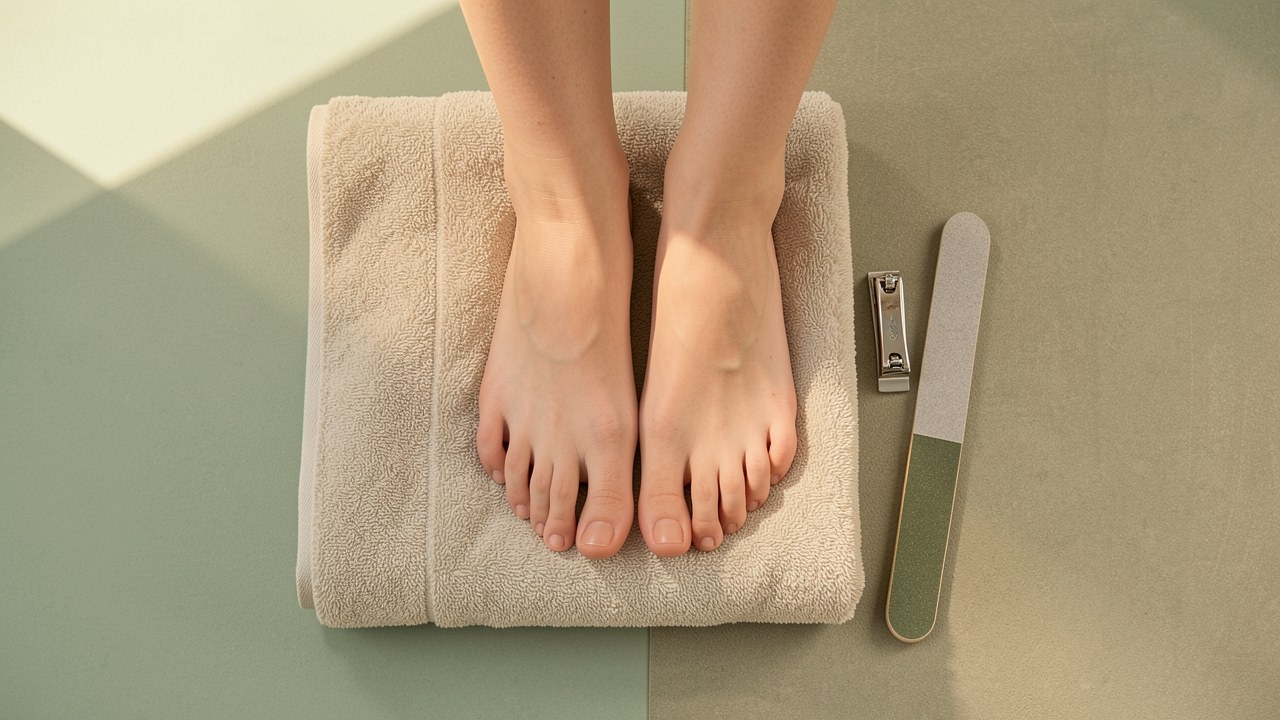
Why foot nails have different hygiene needs
Feet spend most of the day inside socks and shoes, where warmth and moisture create conditions that fingernails rarely encounter. The American Podiatric Medical Association notes that moisture left between the toes can promote athlete's foot or a fungal infection, so feet should be dried thoroughly after washing or soaking until no moisture remains between the toes. That single step matters more for feet than for hands because enclosed footwear holds dampness against the skin and nails.
Hygiene differences also show up in tools. The American Podiatric Medical Association warns against using the same tools for manicure and pedicure services because bacteria and fungus can transfer between fingers and toes. Dedicated foot tools, cleaned between uses, are a basic separation step that keeps hand and foot care from sharing microorganisms.
Finally, foot hygiene is not only about cleaning. A peer-reviewed clinical review in Osteopathic Family Physician identifies poor foot hygiene as one of the factors associated with ingrown toenails, alongside irregular trimming, poor footwear, anatomical deformities, trauma, and genetic predisposition. Keeping the feet clean and dry is therefore part of nail care, not a separate task.
Sources: American Podiatric Medical Association (APMA), American College of Osteopathic Family Physicians (ACOFP) — Osteopathic Family Physician, Vol. 13 No. 3
Trim shape and length differences for toenails
The most important difference between hand and foot nail care is the shape you cut. The American Podiatric Medical Association advises trimming toenails straight across using a toenail clipper with a straight edge, and states that rounded toenail edges increase the odds of painful ingrown toenails. Manicure scissors or fingernail clippers increase the risk of ingrown toenails because of their small, curved shape, so a straight-edged toenail clipper should be used instead.
The Osteopathic Family Physician review supports the same prevention principle: the risk of ingrown toenail development can be reduced by keeping toenails cut straight. Although that review also lists irregular trimming as one of the more common causes of ingrown toenails, it does not provide a specific trimming schedule in weeks or days. A practical guideline is to trim when the nail reaches the tip of the toe or begins to catch on socks, rather than following a fixed calendar.
The same review notes that toenails become thicker and more challenging to maintain as patients age. If trimming becomes difficult or painful, that is a reason to consider professional help rather than forcing a cut with tools that are not designed for thick nails.
- Use a straight-edged toenail clipper, not fingernail clippers or manicure scissors.
- Cut straight across and leave the corners slightly square rather than rounded.
- Trim when the nail reaches the tip of the toe or catches on socks; do not force a fixed schedule.
- If nails are thick or trimming is painful, consider having a professional handle it.
Sources: American Podiatric Medical Association (APMA), American College of Osteopathic Family Physicians (ACOFP) — Osteopathic Family Physician, Vol. 13 No. 3
Filing direction and edge care on toenails
Filing is where hand and foot routines can be adjusted most easily. The American Podiatric Medical Association advises filing nails lightly in one direction with an emery board, without heavy pressure and without scraping the nail surface. Clover Podiatry also describes filing in one direction after trimming straight across, which keeps the edge smooth without thinning the nail.
Filing matters because a sharp or jagged corner can catch on a sock or shoe lining and create a point of pressure. Improper trimming is a recognized factor in ingrown toenails, so filing lightly in one direction after a straight-across cut is a sensible precaution, even though the available guidance does not quantify how much risk reduction it provides.
Because emery boards are porous and cannot be sterilized, the American Podiatric Medical Association advises not sharing them and recommends bringing your own file to a salon unless the salon replaces files for each client. For foot care, where fungal organisms are a known concern, that sanitation habit is especially relevant.
- File lightly in one direction with an emery board.
- Do not press hard or scrape the nail surface.
- Do not share emery boards, and bring your own file to a salon unless files are replaced per client.
- Smooth any corner that could catch on a sock or shoe.
Sources: American Podiatric Medical Association (APMA), Clover Podiatry PLLC
Cuticle differences on toes
Cuticle care is one of the clearest places where hand and foot routines should not simply mirror each other. The American Podiatric Medical Association states that cuticles serve as a protective barrier against bacteria and should not be cut, and that incessant pushing back of cuticles can make them thicker. That guidance is not limited to hands, so the same protective logic applies to the cuticles around toenails.
Some spa and salon descriptions of a pedicure include pushing back or removing cuticles as part of the service. On the Side Day Spa, for example, describes a pedicure as involving soaking, scrubbing, exfoliation, foot massage, toenail shaping, and optional polish, with cuticles possibly pushed or removed. That step conflicts with the American Podiatric Medical Association's advice against cutting cuticles. When you book a pedicure, it is reasonable to ask the technician to leave cuticles intact and to avoid cutting them.
For home care, the safer approach on toes is to soften the cuticle area briefly and gently push back only what moves easily, or to leave it alone entirely. Sharp tools should not be used to clean under nails because they can puncture skin and leave it vulnerable to infection; a wooden or rubber manicure stick is the safer alternative recommended by the American Podiatric Medical Association.
- Do not cut cuticles; they are a protective barrier against bacteria.
- Frequent pushing back can make cuticles thicker, so keep it gentle and infrequent.
- Ask a pedicure technician to leave cuticles intact if the service normally cuts them.
- Use a wooden or rubber manicure stick instead of a sharp tool to clean under nails.
Sources: American Podiatric Medical Association (APMA), On the Side Day Spa
Moisturizing feet without over-softening nails
Moisturizing is essential for foot skin, but it is not the same task as moisturizing hands. The American Podiatric Medical Association advises maintaining the moisture balance of foot skin with an emollient-enriched moisturizer to keep soles soft. Soles and heels need that care because they bear weight and friction, while fingernails and the skin around them are not usually exposed to the same conditions.
The question of whether moisturizer can make toenails too soft for polish does not have a specific, quantified answer in the available guidance. What is clear is that thick, discolored toenails should not be covered with polish. The American Podiatric Medical Association states that if toenails are thick and discolored, which may indicate a fungal infection, nail polish should not be applied to cover the problem because polish locks out moisture and does not allow the nail bed to breathe.
A practical approach is to apply moisturizer to the skin around the nail and to the sole, then wipe excess from the nail plate before polishing. If you are concerned about adhesion, allow the nails to dry fully after any soak or shower before applying polish. A+ Nail School claims that soaking can weaken polish adhesion by causing the nail plate to expand and contract, but this is not an established mechanism.
- Use an emollient-enriched moisturizer on soles and foot skin.
- Avoid covering thick, discolored toenails with polish; polish locks out moisture and does not let the nail bed breathe.
- Wipe excess moisturizer from the nail plate before polishing.
- Let nails dry fully after soaking or showering before applying polish.
Sources: American Podiatric Medical Association (APMA), A+ Nail School
Shoe and sock habits that protect toenails
Footwear is a recurring factor in toenail problems. The Osteopathic Family Physician review lists poor footwear as a contributor to ingrown toenails and states that the risk can be reduced by wearing proper footwear. Advanced Foot Care specifically recommends choosing footwear with a wide rounded toe box to reduce the risk of ingrown toenails.
Socks matter too, although less is said about them in the available guidance. The same review notes that adolescents are prone to hyperhidrosis, which can cause nails to become soft and split easily, suggesting that moisture management inside shoes is relevant to nail condition. Choosing socks that manage moisture and changing them when damp is a reasonable habit, even though the guidance does not provide a specific fabric recommendation.
For salon visits, the American Podiatric Medical Association's recommendation to bring your own file unless the salon replaces files per client is also a footwear-adjacent habit: it protects the feet from organisms that can be picked up in shared environments. Keeping dedicated tools and shoes that do not press on the nail edges are both part of protecting toenails between pedicures.
- Choose footwear with a wide, rounded toe box so the shoe does not press on nail edges.
- Change out of damp socks and shoes when possible to limit moisture exposure.
- Bring your own emery board to a salon unless files are replaced for each client.
- Keep foot tools separate from hand tools to avoid transferring organisms between fingers and toes.
Sources: American Podiatric Medical Association (APMA), American College of Osteopathic Family Physicians (ACOFP) — Osteopathic Family Physician, Vol. 13 No. 3, Advanced Foot Care (advancedfootcareil.com)
When a foot nail problem is not a home-care issue
Most everyday nail care is within reach at home, but some signs point to a problem that needs professional evaluation. The Osteopathic Family Physician review describes ingrown toenails in stages: mild (Stage 1, with redness, swelling, and minimal pain), moderate (Stage 2, with more severe pain plus ulceration and drainage), and severe (Stage 3, typically with granulation tissue and hypertrophy of the nail fold). Management depends on the stage, with Stages 1 and 2 usually managed conservatively and Stage 3 requiring surgical intervention. That staging is a clinical assessment, not a home diagnosis.
Collier Podiatry states that heat, redness, and pus are signs that a toe may be infected, and that redness spreading down the toe or across the foot also indicates infection. Clover Podiatry lists early symptoms such as tenderness along the nail border, mild swelling, slight redness at the nail edge, and discomfort with shoe pressure, and advanced symptoms such as significant pain interfering with walking, visible swelling and inflammation, pus or drainage, red streaking extending from the toe, and throbbing pain. These are clinic descriptions, not a checklist for self-treatment.
Advanced Foot Care states that persistent thickening, brittleness, or yellow and brown discoloration of a nail may point to an underlying fungal infection or other pathology requiring medical attention, and that changes in nail shape, persistent localized pain, swelling, or separation of the nail plate from the nail bed warrant professional evaluation. The same source discourages attempting to treat an ingrown toenail at home with bathroom surgery because it is neither safe nor effective for the underlying mechanical cause and can lead to secondary infection from unsterilized tools as well as jagged nail spicules that increase recurrence risk.
Certain groups should be especially cautious. The American Podiatric Medical Association advises that people with diabetes or poor circulation in their feet consult a podiatrist so a customized pedicure plan can be recommended for them and their salon. The Osteopathic Family Physician review adds that diabetes and vascular conditions can negatively affect how an ingrown toenail presents, and that untreated or improperly treated ingrown toenails can lead to paronychia, scarring around the nail, cellulitis, and osteomyelitis, with notable risk of severe infection and amputation when diabetes is also present. These are reasons to seek professional care early rather than to attempt home treatment.
- Heat, redness, or pus around a toe suggests infection and warrants professional evaluation.
- Redness spreading down the toe or across the foot is also a sign of infection.
- Significant pain with walking, drainage, or red streaking are advanced signs that need clinical care.
- Persistent thickening, brittleness, yellow or brown discoloration, or separation of the nail plate from the nail bed should be evaluated.
- People with diabetes or poor circulation should consult a podiatrist about a customized pedicure plan.
Sources: American Podiatric Medical Association (APMA), American College of Osteopathic Family Physicians (ACOFP) — Osteopathic Family Physician, Vol. 13 No. 3, Clover Podiatry PLLC, Advanced Foot Care (advancedfootcareil.com), Collier Podiatry
Side-by-side category and decision-criteria matrix
The table below compares fingernail care and toenail care at the category level, using the service-scope distinctions described by spa, salon, and nail-care sources and the foot-specific guidance from podiatric and clinical sources. It is a decision aid for what to prioritize, not a product comparison.
As the matrix shows, the biggest practical differences are the trimming shape, the tool separation between hands and feet, and the level of attention paid to moisture and footwear. Fingernail care is mostly about shaping, cuticle care, and polish, while toenail care adds pressure, friction, and enclosed-shoe considerations that do not apply to hands.
| Criterion | Fingernails (manicure focus) | Toenails (pedicure focus) |
|---|---|---|
| Primary area treated | Hands and fingernails, including surrounding hand skin and cuticles | Feet and toenails, including soles and surrounding foot skin |
| Typical goal | Clean, shaped, polished fingernails with cuticle care and a hand massage | Neat toenails, softer skin, and relief from roughness and calluses |
| Trimming shape guidance | Not addressed in the supplied manicure-focused sources | Trim straight across with a straight-edged toenail clipper; do not round the edges |
| Typical service steps | Nail shaping, cuticle care, exfoliation, moisturizing, and polish application | Foot soak, nail trimming and shaping, cuticle care, exfoliation or callus care, moisturizing, and polish application |
| Tool separation | Use dedicated hand tools; do not share emery boards | Use dedicated foot tools; do not use the same tools for hands and feet |
| Moisture management focus | Less emphasis in the available sources | Dry thoroughly between toes; moisture can promote fungal infection |
| Cuticle guidance | Cuticles should not be cut; gentle pushing only, as excessive pushing can thicken them | Same protective principle applies; ask a technician to leave cuticles intact |
| Footwear and pressure factors | Not a primary concern in manicure scope | Wide rounded toe box and proper footwear reduce ingrown toenail risk |
| When to seek professional care | Brittle, discolored, painful, or changing nails may need more than grooming | Heat, redness, pus, spreading redness, significant pain, or drainage need evaluation; diabetes or poor circulation warrants a podiatrist consult |
Sources: American Podiatric Medical Association (APMA), American College of Osteopathic Family Physicians (ACOFP) — Osteopathic Family Physician, Vol. 13 No. 3, Advanced Foot Care (advancedfootcareil.com), Collier Podiatry, On the Side Day Spa, NailPrime, Urban Company, LONDONTOWN
Frequently asked questions
Should toenails be cut straight across?
Yes. Straight-across trimming is the shape recommended by the American Podiatric Medical Association and supported by the Osteopathic Family Physician review. The American Podiatric Medical Association advises trimming toenails straight across using a toenail clipper with a straight edge, and states that rounded toenail edges increase the odds of painful ingrown toenails. Manicure scissors or fingernail clippers increase the risk because of their small, curved shape, so a straight-edged toenail clipper should be used instead. The clinical review likewise states that keeping toenails cut straight can reduce the risk of ingrown toenail development.
Sources: American Podiatric Medical Association (APMA), American College of Osteopathic Family Physicians (ACOFP) — Osteopathic Family Physician, Vol. 13 No. 3How often should toenails be trimmed?
The available guidance does not provide a specific trimming frequency in weeks or days. The Osteopathic Family Physician review identifies irregular trimming as a common cause of ingrown toenails but does not state a schedule. A practical approach is to trim when the nail reaches the tip of the toe or begins to catch on socks, using a straight-edged toenail clipper and cutting straight across. If nails are thick or trimming is difficult, the review notes that toenails become thicker and more challenging to maintain with age, and a professional can help.
Sources: American Podiatric Medical Association (APMA), American College of Osteopathic Family Physicians (ACOFP) — Osteopathic Family Physician, Vol. 13 No. 3Is it safe to push cuticles on toes the same way as fingers?
The American Podiatric Medical Association advises that cuticles should not be cut because they serve as a protective barrier against bacteria, and that incessant pushing back of cuticles can make them thicker. That guidance is not limited to hands, so the same caution applies to toes. Some pedicure services may include pushing or removing cuticles, but you can ask the technician to leave cuticles intact. For home care, gentle pushing of only what moves easily, or leaving cuticles alone, is the safer approach on toes.
Sources: American Podiatric Medical Association (APMA), On the Side Day SpaCan moisturizer make toenails too soft for polish?
No specific, quantified guidance on that point is available. The American Podiatric Medical Association advises maintaining foot skin moisture with an emollient-enriched moisturizer to keep soles soft, but it does not state a duration for keeping moisturizer off toenails before polish or a threshold at which nails become too soft. What the American Podiatric Medical Association does state is that thick, discolored toenails should not be covered with polish because polish locks out moisture and does not allow the nail bed to breathe. For polish adhesion, a practical step is to wipe excess moisturizer from the nail plate and let nails dry fully after any soak or shower before applying polish.
Sources: American Podiatric Medical Association (APMA), A+ Nail SchoolWhat foot nail changes are a reason to stop home care?
Several changes warrant professional evaluation rather than continued home care. The American Podiatric Medical Association advises people with diabetes or poor circulation in their feet to consult a podiatrist for a customized pedicure plan. Collier Podiatry states that heat, redness, and pus suggest infection, and that redness spreading down the toe or across the foot also indicates infection. Advanced Foot Care states that persistent thickening, brittleness, or yellow and brown discoloration may point to a fungal infection or other pathology requiring medical attention, and that changes in nail shape, persistent localized pain, swelling, or separation of the nail plate from the nail bed warrant professional evaluation. The Osteopathic Family Physician review describes stage-based management of ingrown toenails, with severe cases requiring surgical intervention. This is not a complete list, and any concerning change should be evaluated by a clinician.
Sources: American Podiatric Medical Association (APMA), American College of Osteopathic Family Physicians (ACOFP) — Osteopathic Family Physician, Vol. 13 No. 3, Advanced Foot Care (advancedfootcareil.com), Collier PodiatryWhy should hand and foot nail tools be kept separate?
The American Podiatric Medical Association warns against using the same tools for manicure and pedicure services because bacteria and fungus can transfer between fingers and toes. Emery boards are especially difficult to clean because they are porous, trap germs, and cannot be sterilized; the American Podiatric Medical Association advises not sharing them and recommends bringing your own file to a salon unless the salon replaces files for each client. Keeping separate tools for hands and feet is a simple way to reduce cross-contamination.
Sources: American Podiatric Medical Association (APMA)Do pedicures always include cuticle removal?
Not necessarily, and the step is not recommended by the American Podiatric Medical Association, which states that cuticles should not be cut because they are a protective barrier against bacteria. On the Side Day Spa describes a pedicure as possibly involving pushing or removing cuticles, which conflicts with the American Podiatric Medical Association guidance. If you book a pedicure, you can ask the technician to leave cuticles intact and to avoid cutting them.
Sources: American Podiatric Medical Association (APMA), On the Side Day SpaIs it safe to treat an ingrown toenail at home?
Advanced Foot Care states that attempting to treat an ingrown toenail at home with bathroom surgery is discouraged by professionals because it is neither safe nor effective for the underlying mechanical cause and can lead to secondary infection from unsterilized tools as well as jagged nail spicules that increase recurrence risk. The Osteopathic Family Physician review describes stage-based management, with Stages 1 and 2 usually managed conservatively and Stage 3 requiring surgical intervention. If you have heat, redness, pus, spreading redness, significant pain, or drainage, seek professional evaluation rather than attempting home treatment. People with diabetes or poor circulation should consult a podiatrist early.
Sources: American Podiatric Medical Association (APMA), American College of Osteopathic Family Physicians (ACOFP) — Osteopathic Family Physician, Vol. 13 No. 3, Advanced Foot Care (advancedfootcareil.com), Collier PodiatrySources
- Pedicure Pointers — American Podiatric Medical Association (APMA)
- Ingrown Toenail Management — American College of Osteopathic Family Physicians (ACOFP) — Osteopathic Family Physician, Vol. 13 No. 3
- Professional Ingrown Toenail Treatments in Vancouver, WA: Expert Care from Clover Podiatry — Clover Podiatry PLLC
- Preventing Ingrown Toenails with Proper Trimming — Advanced Foot Care (advancedfootcareil.com)
- When Does an Ingrown Toenail Require a Podiatrist? — Collier Podiatry
- What is a Pedicure & What To Expect From One — A+ Nail School
- What is the Difference Between Manicure and Pedicure? — On the Side Day Spa
- Manicure vs Pedicure: Key Differences Explained — NailPrime
- Manicure and Pedicure: The Complete Guide to Nail Care — Urban Company
- Manicure vs Pedicure: What's The Difference? — LONDONTOWN