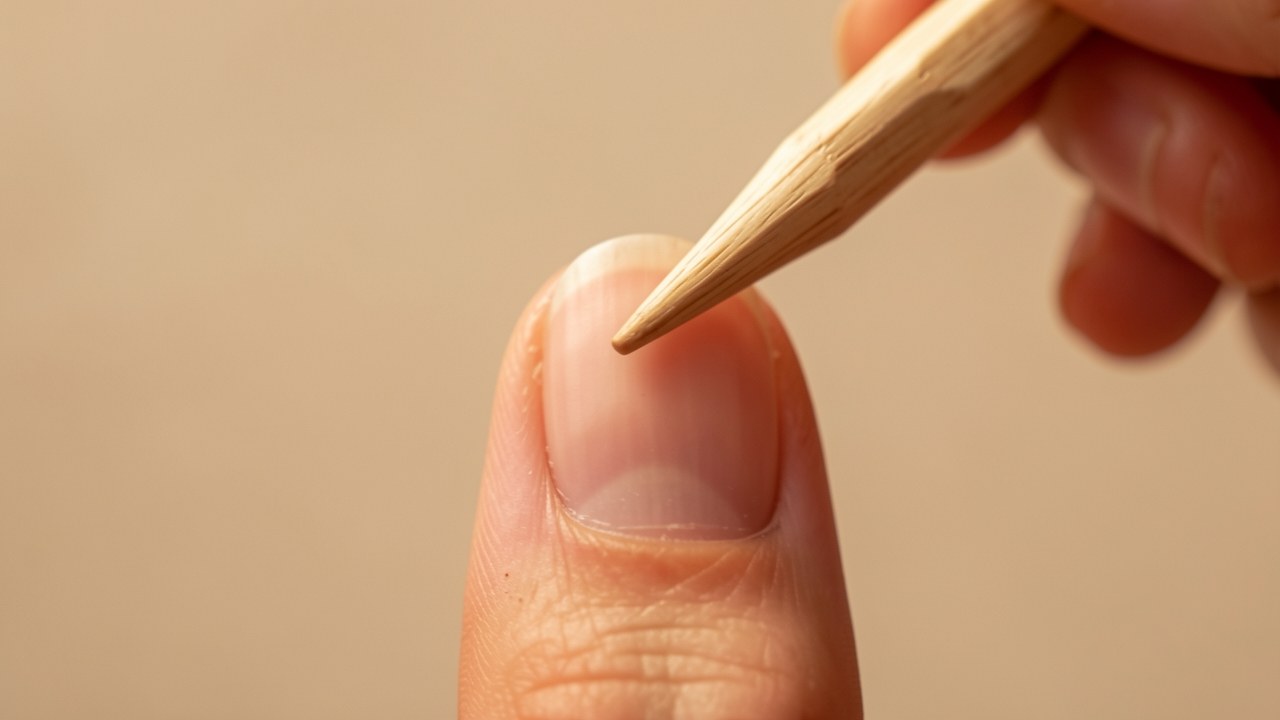
What the cuticle is and what it seals
The cuticle, also called the eponychium, is a thick layer of skin cells along the proximal nail fold that sticks firmly to the outer surface of the nail plate. It forms a continuous seal where the nail emerges from the finger or toe, closing the gap between skin and nail.
That seal is the cuticle's main job. It protects against germs and infection by acting as a barrier between the outside environment and the nail matrix and nail bed, the structures that produce the nail and support it as it grows. Without an intact cuticle, bacteria and fungi have a much easier route into delicate tissue.
- The cuticle is living skin tissue, not just a cosmetic edge.
- It adheres tightly to the nail plate at the base of the nail.
- It seals the space between the proximal nail fold and the nail.
- It guards the nail matrix and nail bed from outside contaminants.
Sources: Cleveland Clinic, Hand and Wrist Institute, SHANGMENG nails
Why the cuticle should not be cut at home
Cutting the cuticle removes a protective seal, making it easier for bacteria and germs to enter and potentially cause infection. The American Academy of Dermatology and the Mayo Clinic advise against cutting cuticles, both at home and in a nail salon.
Nail technicians may push back cuticles and trim hangnails, but if you want to keep your cuticles intact, tell the technician not to cut them. Cutting can also lead to irritation and nail problems such as white spots, ridges and white lines.
- Cutting breaks the barrier that keeps bacteria and fungi out.
- It can cause irritation and changes to the nail surface.
- Dermatology guidance advises against cutting cuticles.
- You can ask a nail technician to push instead of cut.
Sources: Cleveland Clinic, Hand and Wrist Institute, Healthline
pushing technique
The safest approach is to keep the cuticle intact and work with softened skin. Soaking the hand or foot in warm soapy water for about 10 minutes every few days helps soften the cuticle and keeps nails clean. Pushing the cuticle back gently, rather than cutting it, can improve appearance while leaving the seal in place.
Pushing is easiest after a shower, when the area is already softer. Work slowly with a soft tool, keep the pressure light, and stop if you feel pain or see any break in the skin. Frequency guidance varies: some sources suggest every few days, while others emphasize leaving cuticles alone as much as possible. There is no single clinical schedule.
Avoid picking or biting at cuticles. A hangnail should be removed carefully with tweezers or clippers rather than ripped or bitten off.
- Soak the hand or foot in warm soapy water for about 10 minutes, or push after a shower.
- Dry the area thoroughly.
- Use a soft cuticle pusher and apply gentle pressure at the base of the nail.
- Push the tissue back slightly, keeping the cuticle seal intact.
- Stop immediately if you feel pain or notice any break in the skin.
- Finish with cuticle oil or moisturizer.
Sources: Healthline, Hand and Wrist Institute
Products used in cuticle care
The most useful products for cuticle care are simple moisturizers, not cutting tools. Applying cuticle oil or moisturizer regularly can prevent dryness and cracking. Petroleum jelly can be applied overnight to soothe damaged cuticles.
What you remove matters too. Using an acetone-free nail polish remover and limiting harsh polishes and removers can help prevent cuticle dryness. Wearing gloves while cleaning or doing housework protects hands from drying ingredients in cleaning solutions that can cause cracked cuticles.
Cuticle softeners are used to make pushing easier, but they do not replace the barrier function of the cuticle. No product makes the cuticle safe to cut.
- Cuticle oil or moisturizer for daily dryness prevention.
- Petroleum jelly overnight for damaged cuticles.
- Acetone-free nail polish remover.
- Gloves for cleaning and housework.
- Soft cuticle pusher for gentle pushing, not cutting.
Sources: Healthline, Hand and Wrist Institute
Signs of irritation or infection
Paronychia is an infection of the skin around the nail that can develop when bacteria enter broken skin near the cuticle and nail fold. Most infectious paronychia results from Staphylococcus aureus, and other bacteria such as Streptococcus pyogenes can also cause it.
Common signs include redness, swelling, tenderness, pain, and pus-filled blisters where the nail meets the skin. Broader signs of a nail infection include changes in nail color and texture, redness and swelling around the nail, brittle nails, throbbing pain, slight odor, pus or drainage, and separation of the nail from the nail bed.
Untreated paronychia can cause the nail to grow abnormally with ridges or waves, look yellow or green, become dry and brittle, or detach from the nail bed. Chronic paronychia lasts six weeks or longer and is more commonly caused by irritation from occupational or environmental exposures, such as frequent hand wetting, than by a spreading infection.
- Redness, swelling and tenderness around the cuticle.
- Pain or throbbing near the nail fold.
- Pus-filled blisters where the nail meets the skin.
- Changes in nail color, texture or shape.
- Brittle nails or separation from the nail bed.
Sources: Cleveland Clinic, Hand and Wrist Institute, Achilles Foot and Ankle Center, University Health
seek advice
Mild paronychia may be treated at home by soaking the infected area in warm water for about 15 minutes a few times a day and drying it thoroughly. If symptoms do not improve after a day or two of home care, a healthcare provider may need to prescribe antibiotics or drain pus.
Seek urgent care if you notice redness spreading beyond the nail area, severe pain, pus, fever or chills, or worsening despite home care. People with diabetes, poor circulation or weakened immune systems should seek prompt medical care for signs of a nail infection.
This page is general information, not medical advice. A healthcare provider can assess your specific situation and recommend appropriate treatment.
- Redness spreading beyond the nail area.
- Severe pain.
- Pus, fever or chills.
- Symptoms worsening despite home care.
- Diabetes, poor circulation or weakened immunity.
Sources: Cleveland Clinic, Hand and Wrist Institute, University Health
Frequently asked questions
Should I cut my cuticles?
No. Cutting the cuticle removes a protective seal, making it easier for bacteria and germs to enter and potentially cause infection. The American Academy of Dermatology and the Mayo Clinic advise against cutting cuticles, both at home and in a nail salon. If you want your cuticles intact, tell a nail technician not to cut them.
Sources: Cleveland Clinic, Healthline, Hand and Wrist InstituteHow often should I push back my cuticles?
There is no single clinical schedule. Some sources suggest soaking the hand or foot in warm soapy water for about 10 minutes every few days, then gently pushing the cuticle back. Others emphasize leaving the cuticle alone as much as possible. The safest approach is to push gently after a shower, keep pressure light, and stop if you feel pain or see any break in the skin.
Sources: Healthline, Hand and Wrist InstituteWhat does a healthy cuticle look like?
A healthy cuticle forms an intact seal along the proximal nail fold, with no redness, swelling, tenderness or pus. It sticks firmly to the nail plate and protects the nail matrix and nail bed from outside contaminants. Regular moisturizing helps prevent dryness and cracking, which can compromise that seal.
Sources: Cleveland Clinic, Healthline, Hand and Wrist InstituteCan cuticle cream really help nail growth?
There is no evidence that cuticle cream or oil increases nail growth speed. What moisturizers can do is prevent dryness and cracking of the cuticles. Petroleum jelly can be applied overnight to soothe damaged cuticles, and regular use of cuticle oil or moisturizer supports the skin barrier that protects the nail matrix.
Sources: Healthline, Hand and Wrist InstituteSources
- Nails: Fingernail & Toenail Anatomy — Cleveland Clinic
- Paronychia (Nail Infection): What Is It, Symptoms, Causes and Treatment — Cleveland Clinic
- Cuticle: What Is It, Care, Removal, Signs of Infection, and More — Healthline
- Cuticles: What Are They, Care, Signs of Infection — Hand and Wrist Institute
- How to Take Care of Your Cuticles: Guide — SHANGMENG nails
- Signs of Nail Infection: Early Symptoms, When to Seek Care — Achilles Foot and Ankle Center
- When to Go to Urgent Care for an Infected Nail — University Health